
FIDE Exam : Le jeu de rôle / La simulation (A2)
Par Yohann Coussot — professeur de français et spécialiste du test FIDE
Publié le Mis à jour le
Difficulté:A2
FIDE A2 : comprendre la tâche 2 (jeu de rôle au téléphone)
À l’oral FIDE A2, la tâche 2 est une simulation téléphonique : vous échangez avec l’examinateur, qui joue un interlocuteur (gérance, ami, service, etc.). Le but n’est pas de parler longtemps, mais d’être efficace : expliquer un problème, gérer un rendez-vous (prendre, changer, annuler) et proposer une solution.
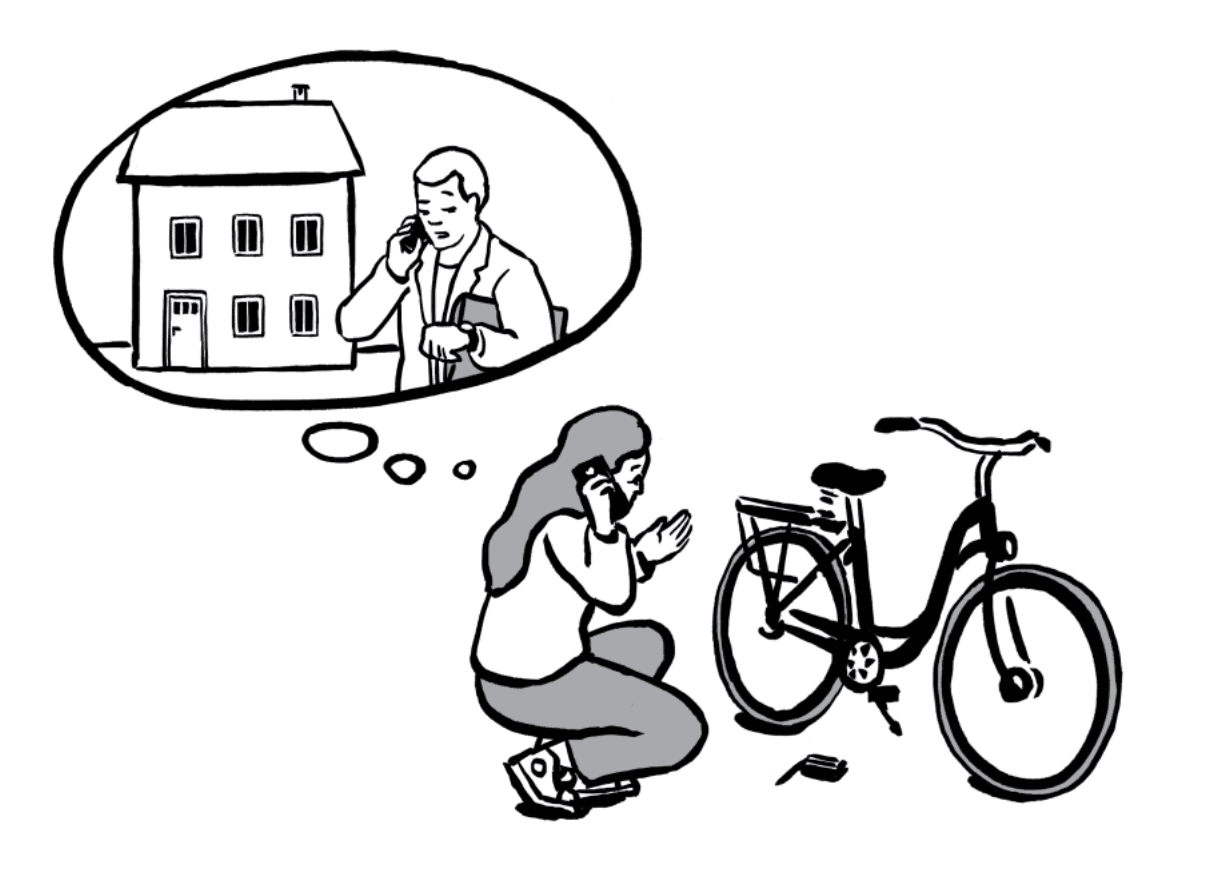

Ce que l’examinateur attend : vous comprenez la situation, vous expliquez clairement le problème, vous cherchez une solution, vous restez poli et vous terminez l’appel correctement.
Vous n’avez pas l’instruction sous les yeux : vous écoutez et vous réagissez. Si un mot bloque, vous pouvez demander une reformulation en français.
➝ Excusez-moi, vous pouvez répéter la situation ?
➝ Excusez-moi, vous pouvez expliquer le mot « gérance » ?
Méthode simple pour réussir
1) Prendre le contrôle dès la première phrase
Dès le début, annoncez pourquoi vous appelez. Si vous êtes clair tout de suite, le dialogue devient plus simple et plus court.
➝ Bonjour, c’est Madame Dupont. Je vous appelle parce que j’ai un problème.
➝ Bonjour, c’est Monsieur Kousso. Je vous téléphone pour vous dire que je dois annuler le rendez-vous.
2) Expliquer le problème : quoi, pourquoi, quand
Gardez une structure très simple : le problème, la cause, la conséquence (retard ou annulation) et le temps si possible.
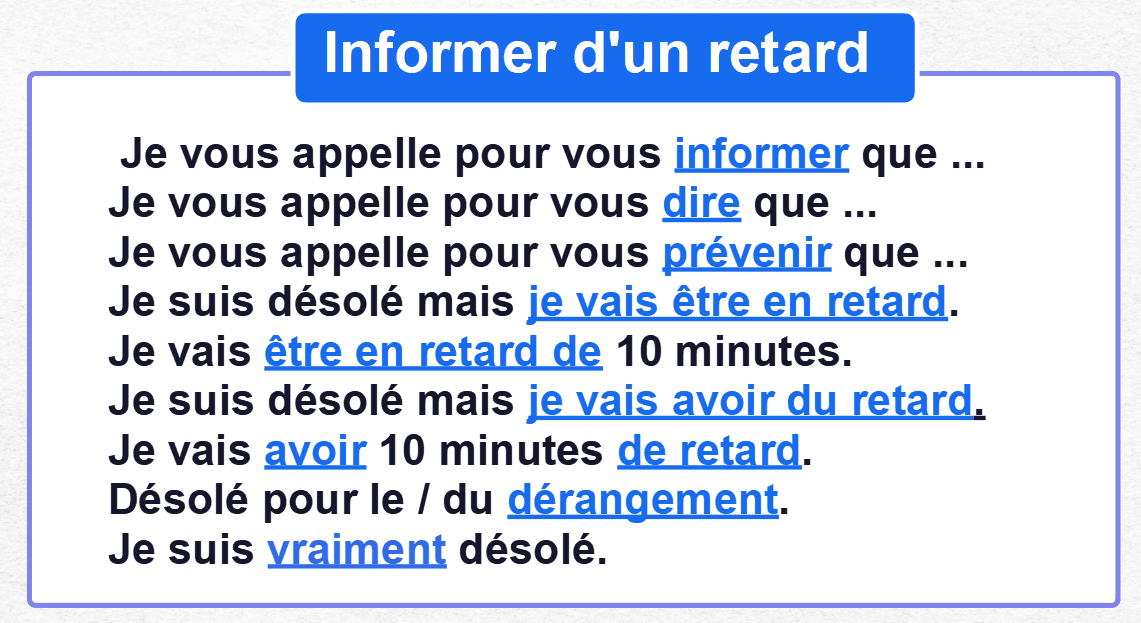
➝ Je vous appelle pour vous prévenir que je vais être en retard de 15 minutes.
➝ Je suis vraiment désolé, j’ai eu un problème avec mon vélo. Je dois annuler le rendez-vous d’aujourd’hui.
3) Proposer une solution et valider les détails
Une bonne performance, c’est problème + solution. Même une solution simple suffit : proposer un autre horaire, un autre jour, ou demander une option.
Pour être poli, vous pouvez utiliser le conditionnel : ce serait possible…
➝ C’est possible de reporter le rendez-vous à demain ?
➝ Ce serait possible de changer l’heure du rendez-vous ?
➝ Est-ce que vous pouvez me proposer une autre date, s’il vous plaît ?
Quand l’interlocuteur accepte, confirmez : heure, jour, lieu, et prochaine action.
➝ D’accord, donc rendez-vous demain à 18h30, c’est noté. Merci beaucoup.
➝ Parfait, je vous envoie un message dès que je suis dans le bus.
4) Terminer l’appel correctement
Concluez toujours avec une formule simple : remerciement + au revoir + bonne journée.
➝ Merci beaucoup pour votre compréhension. Au revoir, bonne journée.
➝ Merci encore. À tout à l’heure. Au revoir.
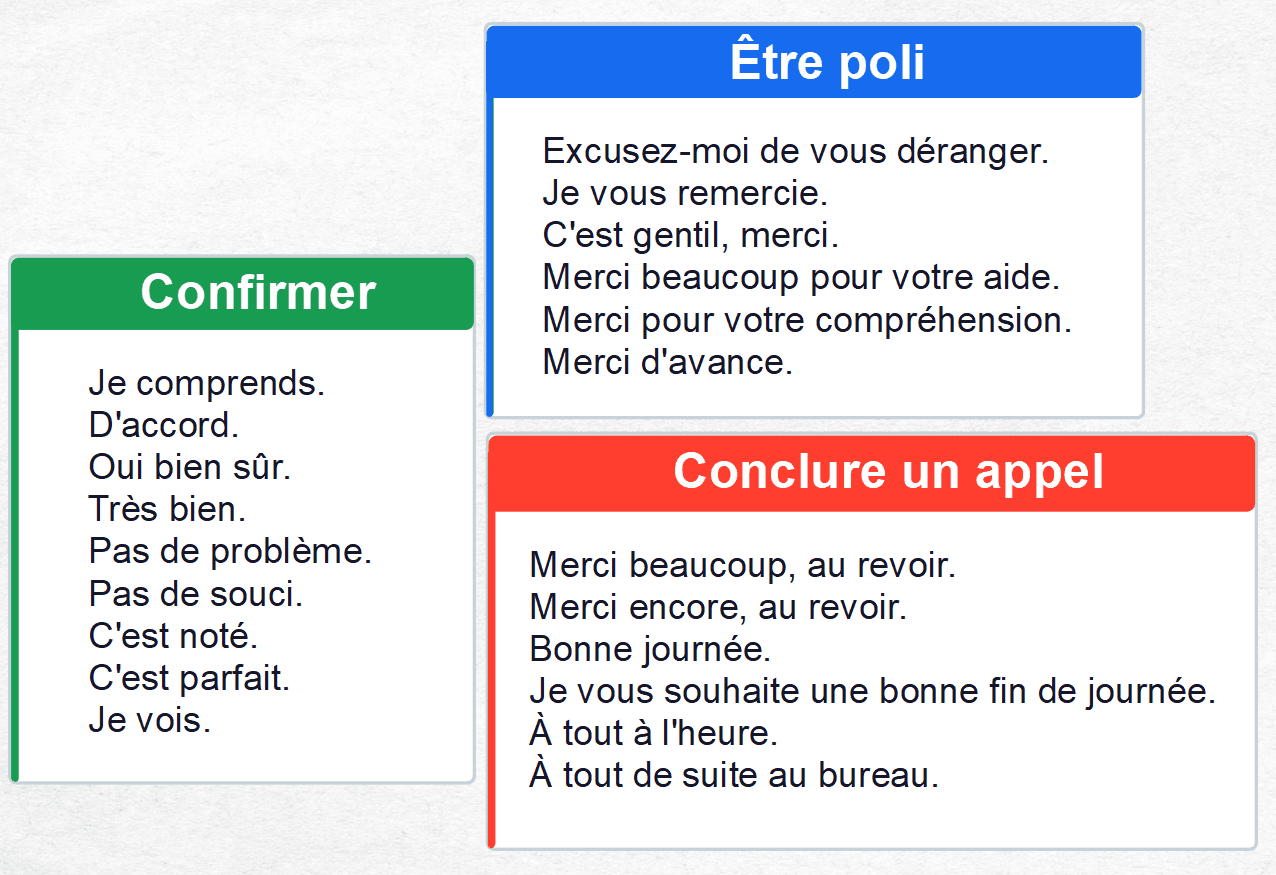
Les phrases indispensables à mémoriser (A2)
Les situations se ressemblent souvent. Apprenez des « blocs » que vous réutilisez selon le scénario.
Se présenter + raison : Bonjour, c’est… / Je vous appelle parce que…
Informer : Je vous appelle pour vous dire que… / Je vous appelle pour vous prévenir que…
Demander : Est-ce que vous pouvez… ? / C’est possible de… ? / Ce serait possible de… ?
Confirmer : D’accord, je comprends. / C’est noté. / Parfait.
Remercier : Je vous remercie. / Merci beaucoup. / Merci pour votre aide.
Scénarios fréquents à l’examen
Annuler une visite / un rendez-vous (ex. problème de vélo)
Objectif : annoncer l’annulation, donner une raison simple, proposer une alternative.
Bonjour, je vous appelle parce que j’ai un problème avec mon vélo. Je dois annuler la visite de l’appartement.
Est-ce que ce serait possible de fixer un autre rendez-vous cette semaine ?
Prévenir d’un retard et trouver une solution (ex. bus raté)
Objectif : annoncer le retard, donner une estimation, chercher une solution.
Salut, je suis vraiment désolé. J’ai raté le bus et je vais arriver dans environ 30 minutes.
Tu sais s’il y a un autre moyen ? Est-ce que quelqu’un peut venir me chercher ?
Erreurs fréquentes à éviter
Attendre trop de questions
Si vous attendez, le dialogue devient plus difficile. Donnez l’essentiel dès le début : raison + conséquence + temps.
Oublier la solution
Proposez toujours quelque chose : changer l’heure, reporter à demain, demander une autre option, confirmer la suite.
Se perdre dans les détails
Restez sur une structure claire : problème → conséquence → solution → confirmation → fin d’appel.
Conclusion
Pour réussir la simulation, gardez 3 réflexes :
1) annoncez tout de suite pourquoi vous appelez,
2) expliquez simplement le problème,
3) proposez une solution claire et confirmez les détails.
Pour continuer votre préparation
Découvrez le déroulement des autres épreuves dans notre guide complet du test FIDE
Travaillez cette compétence avec un professeur lors de cours privés FIDE
Poursuivez avec : FIDE A2 oral : réussir la discussion de la tâche 3

Contact préparation au test
Derniers articles
Tous les articles